Rug Encyclopedia · Afghan Rugs
An Afghan rug is an oriental rug hand-knotted in Afghanistan — home to a deep Turkmen and tribal weaving heritage and today the world’s great revival centre, where weavers hand-knot both traditional Afghan designs and vegetable-dyed revivals of Persian and Caucasian classics.
What is an Afghan rug?
An Afghan rug is a rug hand-knotted in Afghanistan — a land with a deep Turkmen and tribal weaving heritage and, today, the world’s great revival centre for hand-knotting. Afghan weavers produce both their own traditional designs and faithful, vegetable-dyed revivals of Persian and Caucasian classics, including the modern Kazak and Ziegler.

Who weaves them — the story behind most of what we sell
Afghan weaving as you meet it today was shaped by displacement. Through the 1980s and 1990s, waves of Afghan refugees — Hazara weavers among them — resettled in and around Peshawar in north-west Pakistan, carrying a living hand-knotting tradition with them. Workshops grew there, and later back inside Afghanistan, and those workshops are where the modern Afghan rug came from: not a museum revival, but a craft that moved with the people who knew it.1
That matters commercially as well as humanly. It is why an Afghan loom today can produce a Caucasian Kazak, a Persian Sultanabad design, a Turkmen gul and a modern minimal field with equal fluency — the weavers inherited more than one tradition and kept all of them. It is also the true origin story of most of the rugs on this site, and it is a better one than borrowed Persian romance.
It also means the border matters less than the label suggests. A great many rugs the trade calls “Afghan” are woven in Pakistan by Afghan weavers — in camps, workshops and weaving centres around Peshawar and along the frontier. Same designs, same families, different side of a line. We label each rug with the country it was actually made in, which is why you will find the same design under two origins here. See Pakistani rugs for that side of the story.
The wool, and why it matters here
Afghan weaving runs on hand-spun highland wool, with Ghazni wool the name most often singled out — valued for long staple and for the way it takes natural dye. Hand-spun yarn is uneven along its length by nature, and that unevenness is what gives a hand-dyed rug its depth of colour rather than a flat, dead one.
One honest note, because the trade rarely makes it. That gentle colour variation — abrash — tells you the wool was dyed by hand in small batches. It does not prove a rug was knotted by hand: machine yarn is manufactured specifically to imitate the effect. If you want to know how a rug was made, turn it over and read the back. We cover that in full in our guide to abrash.
What we make in Afghanistan
Nearly everything. Around four-fifths of our catalogue is woven in Afghanistan, across several distinct traditions:
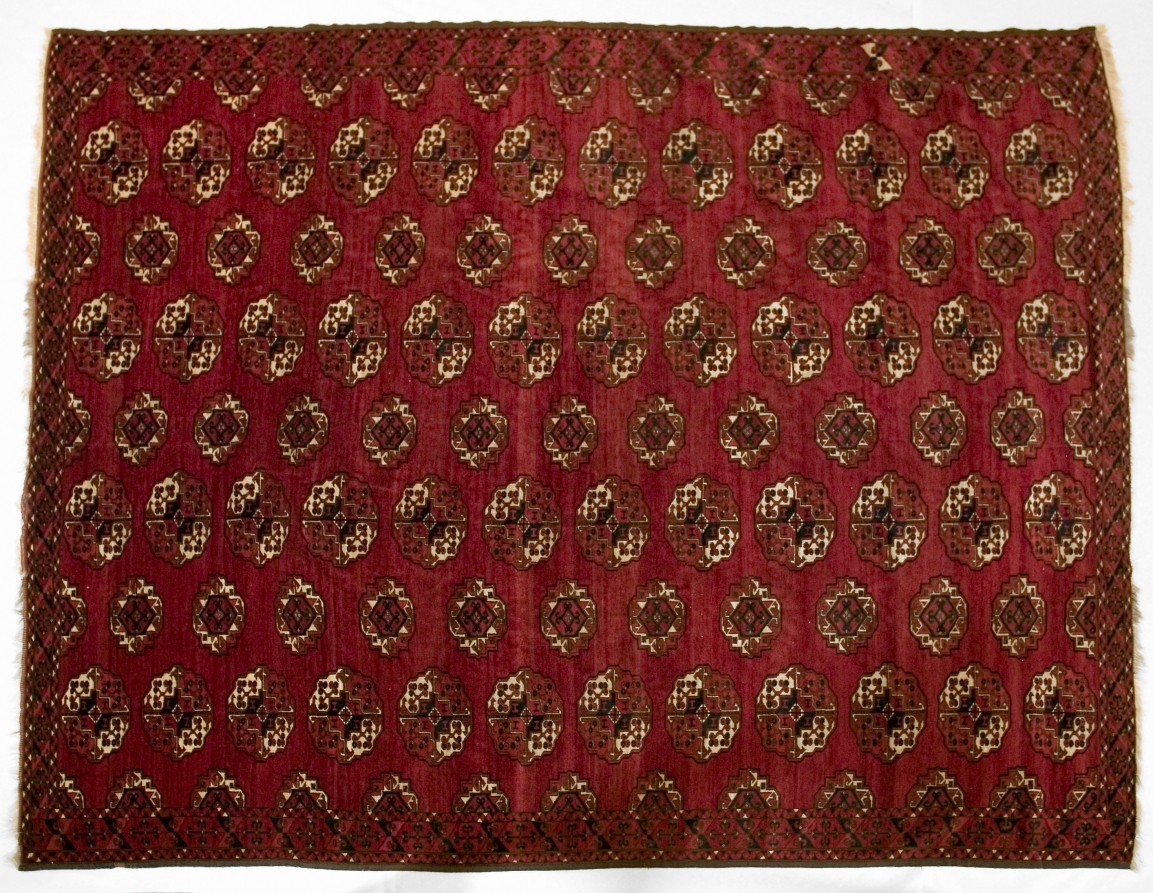
- Traditional Afghan — deep reds and blues, in a stated quality ladder: Beljik is the finest, Khamyab the middle, Khal Mohammadi the entry grade. Most sellers use these three names interchangeably. They are not interchangeable, and knowing the order is worth more than any adjective.
- Kazak — Caucasian geometry, woven in Afghanistan. Our own grades run Super Kazak then Afzali Kazak, one step apart in weave count.
- Khurjeen — the compartmented saddlebag panel, translated into knotted pile at room size.
- Shaal — patterning drawn from classical Persian shawl design.
- Humna — the elevated end of the tribal repertoire: deeper colour, premium hand-spun wool, natural dyes.
- Revival — tribal-style rugs at a looser weave, made deliberately so that buying a real hand-knotted rug online does not have to be a large decision.
- Ariana — the finest Ziegler and Chobi-style weaving we produce, in very small batches.
- Serenity, Overdye and Onyx — not separate weaves at all, but three finishes applied to the same Afghan-woven rug.
What happens after the loom — in our own plant
A rug leaving an Afghan loom is not finished. Ours travel to our own washing and finishing facility, where they are measured in, then put through a cycle that is repeated three to five times: trimmed, tumbled in a drum that drives out dust and relaxes the pile, washed, brushed straight, and dried in the sun. Then bound, stretched on a wooden platform to dry square, corrected by hand, and inspected under hard light before packing.
That repetition is where the sheen comes from, and it is the honest answer to a question the trade usually leaves hanging: why does a new rug already look and feel settled? Because someone decided it should, and spent months getting there. Most sellers cannot describe this because they buy their rugs finished. We can describe it because we do it.
Source
1. On the 1980s–90s resettlement of Afghan weavers around Peshawar and the growth of workshop production, see the modern-production literature surveyed in our Kazak guide.
The Afghan rugs we carry
- Khal Muhammadi — the classic deep-red Afghan rug with repeating Turkmen guls; rich, durable and traditional.
- Kazak (Afghan-woven) — bold Caucasian geometry, hand-knotted today in Afghan workshops with hand-spun wool and natural dyes.
- Ziegler (Afghan-woven) — softened, open Sultanabad designs for Western interiors.
- Khotan — the East-Turkestan tradition of open fields, pomegranate and lattice designs.
Shop the Afghan collection, or browse the full rug encyclopedia.
How Afghan rugs are made
Afghan rugs are hand-knotted from hand-spun highland wool on a cotton or wool foundation, most often with the symmetrical knot, using natural vegetable dyes that give the modern revivals their antique look and honest abrash. Learn more in our how a rug is made guide.

Hand-knotted vs machine-made — labeled honestly
A genuine Afghan rug is hand-knotted, one knot at a time — durable, repairable and one of a kind. Machine-made copies exist; they are not hand-knotted and do not wear or age the same. At Arteverk hand-knotted rugs are the heart of what we do, and any power-loomed piece is labeled plainly on its Construction field.
How to choose an Afghan rug
Afghan rugs range from the deep, traditional reds of Khal Muhammadi to the bold geometry of Afghan Kazak and the muted elegance of Afghan Ziegler. Choose your size first (see the rug size guide; up to oversize and palace, 12'×15' and larger).
- Real makers & curators. The Malik family — third-generation weavers and curators who commission, curate and restore hand-knotted rugs woven in origin workshops.
- The exact piece you see. Every hand-knotted rug is photographed as the single, one-of-a-kind rug you’ll receive.
- Honest labeling. Design tradition vs country of weaving stated plainly; any power-loomed piece labeled as such.

Find your Afghan rug
Browse our hand-knotted Afghan rugs, or tell us your size and colors and we’ll hand-pick a few one-of-a-kind pieces for you.
Frequently asked questions
What is an Afghan rug?
An Afghan rug is an oriental rug hand-knotted in Afghanistan, including traditional designs like Khal Muhammadi and vegetable-dyed revivals of Persian and Caucasian classics such as modern Kazak and Ziegler.
Are Afghan rugs good quality?
Hand-knotted Afghan rugs are known for durable hand-spun wool and natural vegetable dyes. Quality varies by knot density, wool and dye. Machine-made copies exist and are labeled plainly at Arteverk.
Is an Afghan Kazak a real Kazak?
The Kazak design originates in the South Caucasus, but the tradition is hand-knotted today mostly in Afghanistan and Pakistan. An Afghan-woven Kazak is a genuine hand-knotted rug in the Caucasian design tradition.
Are Afghan rugs hand-knotted?
Genuine Afghan rugs are hand-knotted. At Arteverk hand-knotted rugs are the focus and any power-loomed piece is clearly labeled.
What size Afghan rug do I need?
Match the rug to the room so it anchors the furniture. Arteverk carries sizes up to oversize and palace pieces of 12x15 and larger.
Shop Afghan rugs by type & colour
Live collections of one-of-a-kind rugs currently in stock.