Rug Encyclopedia · Persian Rugs
Most Persian weaves never make it into a buyer's guide. These are the smaller villages, tribal groups and city workshops behind rugs we hold only a handful of at a time — each with a real place, a real history, and a reason it looks the way it does.
Why these are grouped together
Persia is not a handful of famous names. It is hundreds of weaving settlements, and the ones below are places we hold only a few pieces from — sometimes a single rug. Rather than pretend each supports a full guide, we have put them in one place and given each a straight answer: where it is, what it looks like, and how it relates to the weaves you already know.
North-west Iran
Karaja — a village in the Heriz district, best known for runners with three linked medallions in a distinctive stepped, angular drawing. Firm, hard-wearing, and unusually easy to identify.
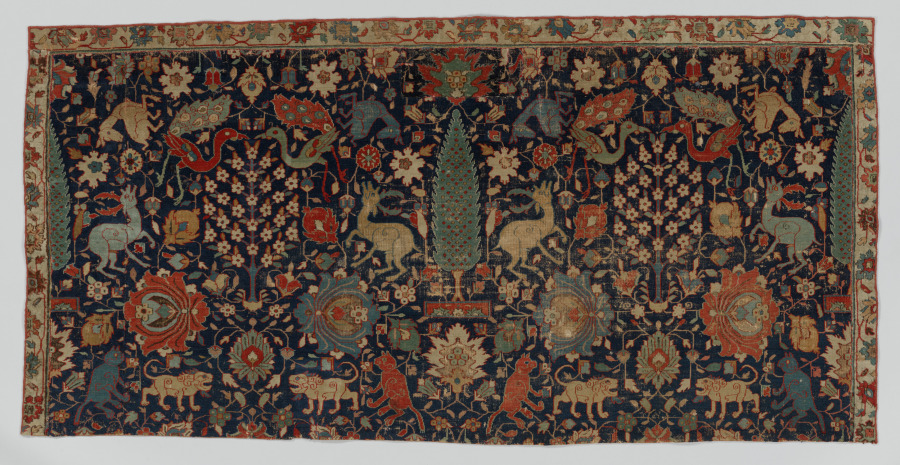
Sarab — north-west, near Heriz, and known above all for long camel-ground runners with a spare, pole-medallion field. The undyed camel tone is the signature.
Navahand and Bibikabad — both in the vast Hamadan weaving district. Bibikabad is particularly associated with large room-size village rugs in a herati field, which is unusual for the region.
Hosseinabad — an Arak-region village, closest in character to the Sultanabad family, with an open all-over field.
Central Iran
Najafabad — a town near Isfahan weaving in the Isfahan idiom at a larger, more robust scale. If you want the Isfahan drawing in a rug built for a family room, this is where it comes from.
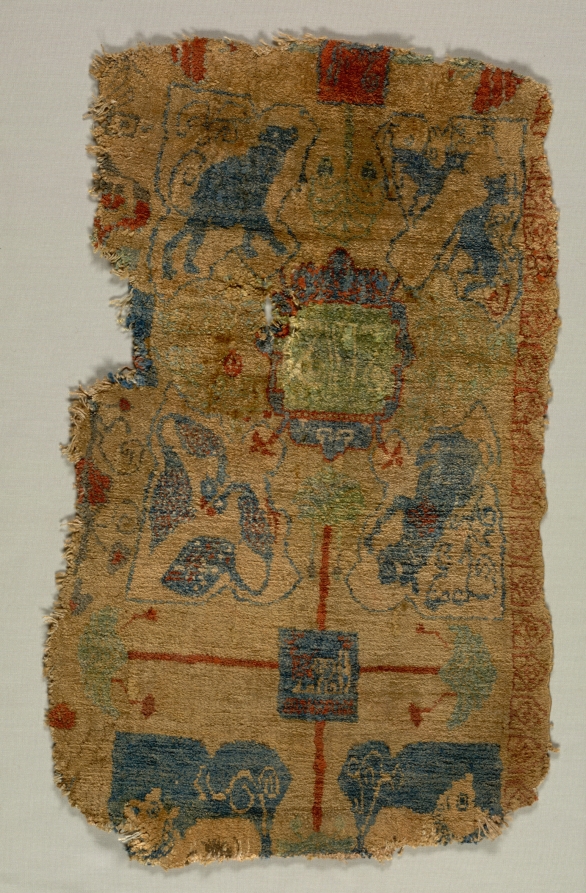
Tehran — city weaving from the capital, and genuinely uncommon. Tehran production was never large, and fine antique examples are scarce.
Yazd — a desert city between Isfahan and Kerman, weaving in a manner close to its Kerman neighbour.
Tribal and confederation weaves
Shiraz — strictly speaking a market, not a weave. Shiraz is where the rugs of the Fars tribes were traded, and the name attached to the goods. What you are usually looking at is Qashqai or Khamseh weaving.
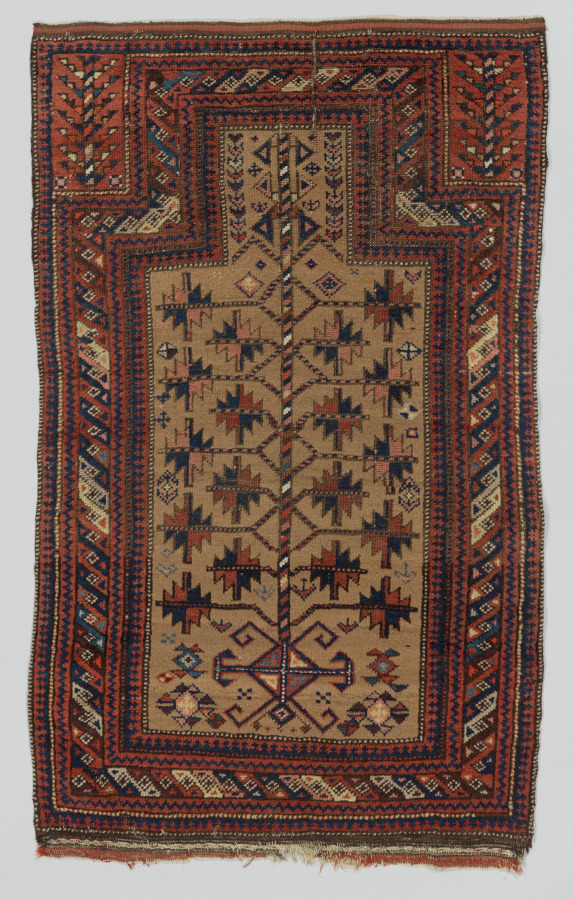
Yalameh — Fars-region tribal weaving in stacked diamond medallions and strong colour, from Luri and Qashqai-related groups.
Afshar — a Turkic-origin confederation resettled toward Kerman in the south-east. Afshar weaving keeps a tribal geometry while borrowing from the Kerman floral vocabulary nearby.
Two names in this group that are not Persian
Both are frequently shelved with Persian rugs. Neither is, and we would rather say so.
Herki — Kurdish weaving from the border region where Turkey, Iraq and Iran meet. Kurdish rugs are their own tradition, and calling them Persian obscures more than it explains.
Tekke — Turkmen, from Central Asia. The Tekke are one of the major Turkmen tribes, and the repeating gul that defines their work is a Turkic motif, not a Persian one. It is often sold under the trade name “Bukhara” — which is itself misleading, since Bukhara was a market rather than a weaving centre.
How to read an unfamiliar Persian name
Three questions settle most of it. Is it a place, a tribe, or a market? Shiraz is a market; Qashqai is a tribe; Kashan is a place. Is it city, village or nomadic weaving? That tells you far more about density, drawing and durability than the name alone. And what is the attribution based on? Specialists read structure — knot, foundation, wefting — because a design can be woven anywhere, while a weave records where it was made.
